On this page 7 sections
Fragrance is an ingredient some people prefer to avoid, especially when their skin feels reactive or easily bothered. Choosing fragrance-free products sounds simple, but the wording on a label can be confusing. This guide explains what the terms mean and how to check for yourself.
Fragrance-free versus unscented
These two labels sound alike but are not interchangeable. A fragrance-free product has no fragrance ingredients added. An unscented product does not smell strongly, but it can contain ingredients added to mask the smell of other ingredients. The terms are not tightly standardized, so the ingredient list is the best source of truth.
Reading the label
| Label wording | What it usually means | What to check |
|---|---|---|
| Fragrance-free | No fragrance added | Scan the ingredient list for fragrance or parfum |
| Unscented | Little noticeable scent, possibly with masking ingredients | Read the full ingredient list |
| Hypoallergenic or for sensitive skin | Marketing terms with no set standard | Take it as a hint, not a guarantee |
| Made with essential oils | Plant-derived scent is still scent | Look for oils such as lavender, citrus or peppermint |
On the ingredient list, look for the words fragrance, parfum or perfume. You may also see individual scent compounds such as linalool or limonene near the end of the list. Essential oils are often listed by their Latin names, such as Lavandula angustifolia for lavender or Citrus limon for lemon. Our guide to reading a skin care ingredient list shows how the order works.
Which products matter most
Leave-on products stay on your skin all day, so many people start there: moisturizers, serums, sunscreen, eye cream and lip products. Rinse-off products such as cleansers touch your skin for less time, though they still matter, especially near the eyes. Body lotions and lip products can be scented too, so check those labels as well. Scent can also come from things that touch your face, such as hair products and scented laundry detergent.
What fragrance-free does not guarantee
Fragrance-free is a helpful filter, not a promise that a product will suit you. Other ingredients can still bother some people, so patch test anything new.
A fragrance-free product can also have a mild scent of its own, from ingredients such as shea butter or retinol. That is normal, and it is different from added perfume.
A simple way to switch
- Start with one leave-on product, such as your moisturizer or sunscreen.
- Patch test it: apply a small amount to the inside of your forearm and wait 24 hours. Our guide to patch testing a new product has the full steps.
- Keep the rest of your routine the same for about two weeks.
- If your skin feels comfortable, swap the next product.
If redness, burning or itching keeps returning or gets worse, talk with a healthcare professional.
Where to go next
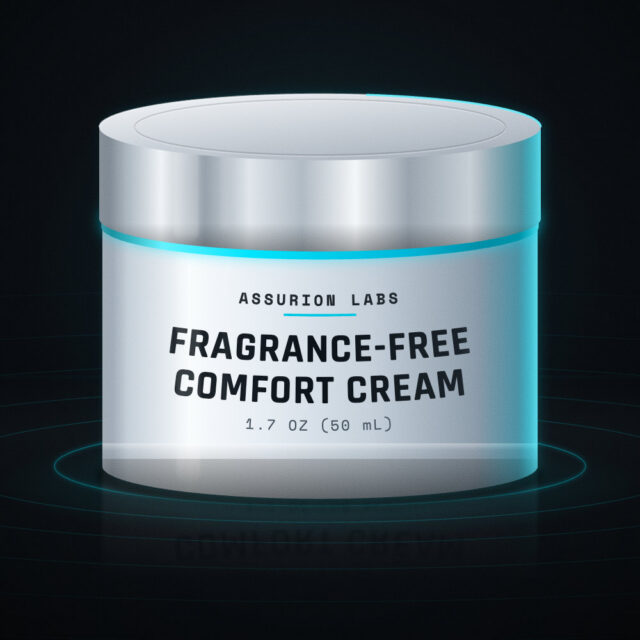
Fragrance-Free Comfort Cream is one starting point in our range, and our bundles and sets include a Sensitive Skin Routine that pairs it with a gentle cleanser and a daily sunscreen. For more on skin that feels easily bothered, visit Sensitive Skin. Whatever you choose, confirm the ingredient list on the product page or label.
Frequently asked questions
Is unscented the same as fragrance-free?
No. Fragrance-free means no fragrance ingredients were added. Unscented means the product has little noticeable smell, and it may contain masking ingredients. Check the ingredient list to be sure.
Are essential oils considered fragrance?
In skin care, essential oils are usually added for their scent, so if you are avoiding fragrance it is sensible to avoid them too. They are natural, but natural does not mean gentler for every person.
Should I choose fragrance-free if my skin is not sensitive?
It is a personal preference. Some people simply like products without added scent. If your current products feel comfortable, there is no need to switch.
Will fragrance-free products smell like nothing?
Not always. Ingredients such as shea butter, retinol or plant extracts can have a mild scent of their own. A faint, natural smell is different from added perfume.
What should I do if a product irritates my skin?
Rinse it off and stop using it. Note what you used so you can spot patterns, and patch test new products in future. If irritation is persistent, painful or getting worse, talk with a healthcare professional.
This content is for general cosmetic and educational purposes only and is not medical advice. It is not intended to diagnose, treat, cure, or prevent any disease or skin condition. If you have a skin condition, are pregnant or nursing, or have concerns about a product, talk with a qualified healthcare professional.