On this page 8 sections
Ingredient facts
Vitamin C
- What it is
- Vitamin C is a water-soluble antioxidant. On labels it may appear as L-ascorbic acid or as gentler, more stable derivatives such as ascorbyl glucoside.
- Why it is commonly used
- It is commonly used to help skin look brighter and more even-toned. It is a popular addition to daytime routines.
- Common product types
- Serums are the most common, plus moisturizers, eye creams and masks. Look for dark or opaque packaging, because light and air break it down.
- How to add it to a routine
- Apply after cleansing and before moisturizer, usually in the morning. Start every other day and finish with sunscreen.
- Pairs well with
- Sunscreen, hyaluronic acid, moisturizers and niacinamide. Many people keep retinol for the evening.
- Usage considerations
- Patch test first, and stop use if stinging or irritation continues. Store it capped and away from heat and light, and keep using sunscreen as directed.
Vitamin C is one of the most widely used ingredients in skin care, and one of the most confusing. Labels list several forms, formulas come in different strengths, and advice on when to use it varies. This guide keeps it simple: what vitamin C is, why people use it and how to fit it into your mornings.
What vitamin C is
Vitamin C is a water-soluble vitamin and an antioxidant. Antioxidants are ingredients that help neutralize free radicals, the unstable molecules that form when skin is exposed to things like sunlight and pollution.
The form on the label matters, because the forms behave differently.
| Form on the label | What to know |
|---|---|
| Ascorbic acid or L-ascorbic acid | The pure form and the one discussed most. It can tingle, and it breaks down quickly with light and air. |
| Ascorbyl glucoside, sodium ascorbyl phosphate, magnesium ascorbyl phosphate | Derivatives that are usually more stable and often feel gentler. They are different molecules, so how they feel and perform varies. |
Why it is commonly used in skin care
Vitamin C is most often chosen to help skin look brighter and more even-toned. People reach for it when their complexion looks dull, or when they want to help the appearance of uneven tone and dark spots.
Its antioxidant role also makes it a common partner for daytime sunscreen. It does not replace sunscreen, though. Think of it as something you add to sun care, not a substitute for it.
Common product types
Serums are the most common format, because a light serum can carry the ingredient without feeling heavy. You will also find vitamin C in moisturizers, eye creams, masks and powders that you mix yourself.
Because vitamin C breaks down when it meets light and air, look for dark or opaque packaging and a pump or dropper that limits exposure.
How to add it to a simple routine
- Cleanse your face and pat it dry.
- Apply a few drops of vitamin C serum to the whole face.
- Moisturize so skin stays comfortable through the day.
- Finish with sunscreen, following its directions.
Morning is the most common time to use it, just before sunscreen. Evening works too if that suits you better. Start every other day for the first week or two, then move to daily if your skin feels comfortable. If you are unsure about the order of products, our guide to what order to apply skin care walks through it.
What it pairs well with
- Sunscreen is the natural last step over a vitamin C routine.
- Hyaluronic acid and moisturizers add hydration, which can help skin feel comfortable if a vitamin C formula feels a little drying.
- Niacinamide can share a routine with vitamin C. If your skin feels irritated, use one in the morning and the other in the evening.
- Retinol is often used at night while vitamin C stays in the morning, which keeps things simple.
Usage considerations
- Patch test first. Apply a small amount to the inside of your forearm and wait 24 hours.
- A brief tingle is common with L-ascorbic acid. Stinging, burning or lasting redness is not. Stop use and rinse, and talk with a healthcare professional if irritation continues.
- A higher percentage is not automatically better, especially for sensitive-feeling skin.
- Store it capped, away from heat and sunlight. If it turns dark orange or brown, or smells different, it has likely oxidized and is better replaced.
- Keep it away from your eyes unless the label says it is made for that area.
Where to go next
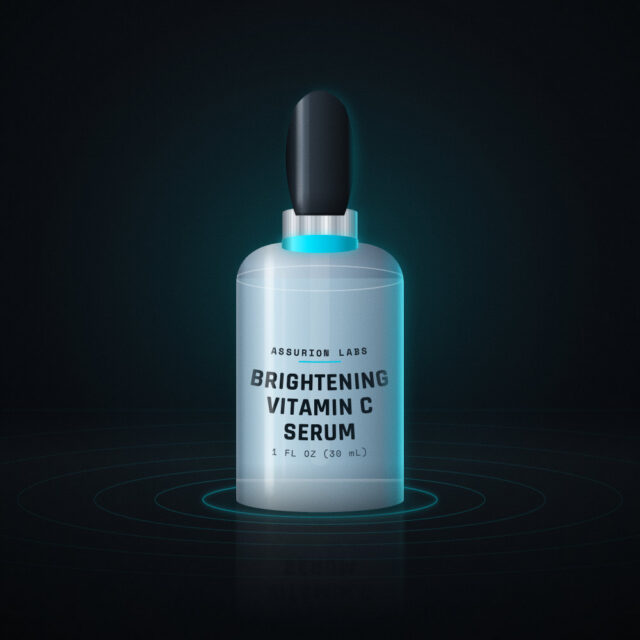
If you would like a vitamin C serum to try, the Brightening Vitamin C Serum from Assurion Labs comes in a 1 fl oz and a 2 fl oz size. You can browse skin care with vitamin C, visit the uneven tone and dark spots page, or compare other ingredients on the Shop by Ingredient page.
Frequently asked questions
Should I use vitamin C in the morning or at night?
Most people use it in the morning, just before sunscreen. Evening use is fine too. Choose the time you will stick with, and follow the directions on your product.
Can I use vitamin C with niacinamide?
Yes, they can be used in the same routine. If your skin feels irritated, try them at different times of day, such as vitamin C in the morning and niacinamide in the evening.
Why has my serum changed color?
Vitamin C reacts with light and air, so many serums darken slowly over time, and a pale yellow tint can be normal for some formulas. If yours turns dark orange or brown, or smells different, it is better to replace it.
Does vitamin C replace sunscreen?
No. Vitamin C is an antioxidant, not a sunscreen. Use a sunscreen every morning as directed, reapply at least every 2 hours when outdoors, and limit sun exposure.
Can I use vitamin C if my skin feels sensitive?
Many people can, but start slowly. Patch test first, use it every other day at the beginning, and consider a gentler derivative or a lower strength. If you have concerns or a skin condition, ask a healthcare professional.
This content is for general cosmetic and educational purposes only and is not medical advice. It is not intended to diagnose, treat, cure, or prevent any disease or skin condition. If you have a skin condition, are pregnant or nursing, or have concerns about a product, talk with a qualified healthcare professional.
Patch test before first use: apply a small amount to the inside of your forearm and wait 24 hours. Stop use and rinse if irritation occurs. For external use only. Avoid contact with eyes.